Posidonia Press Releases
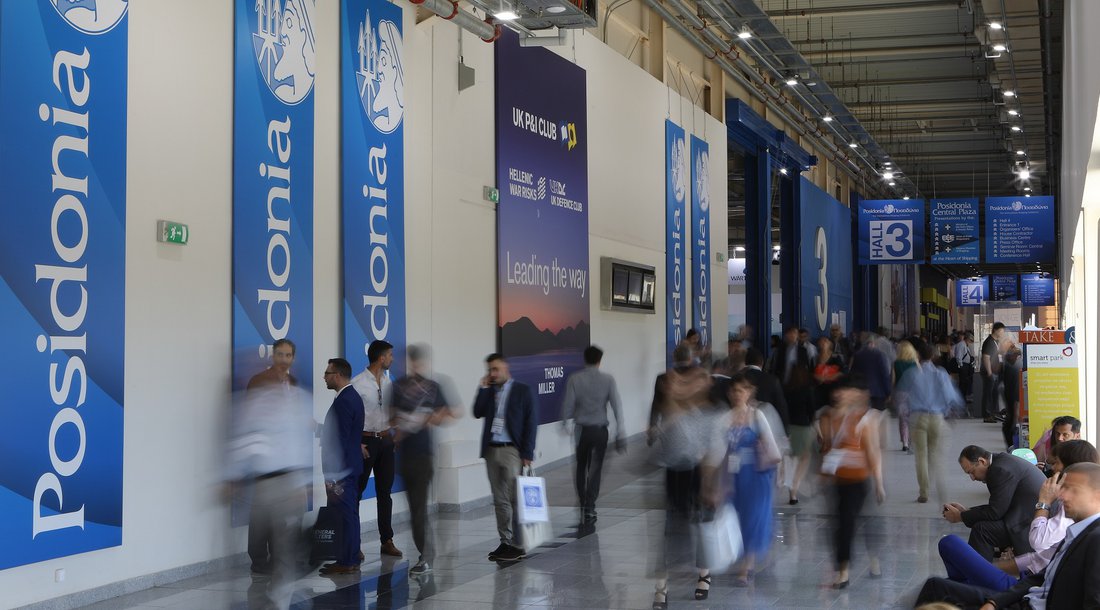

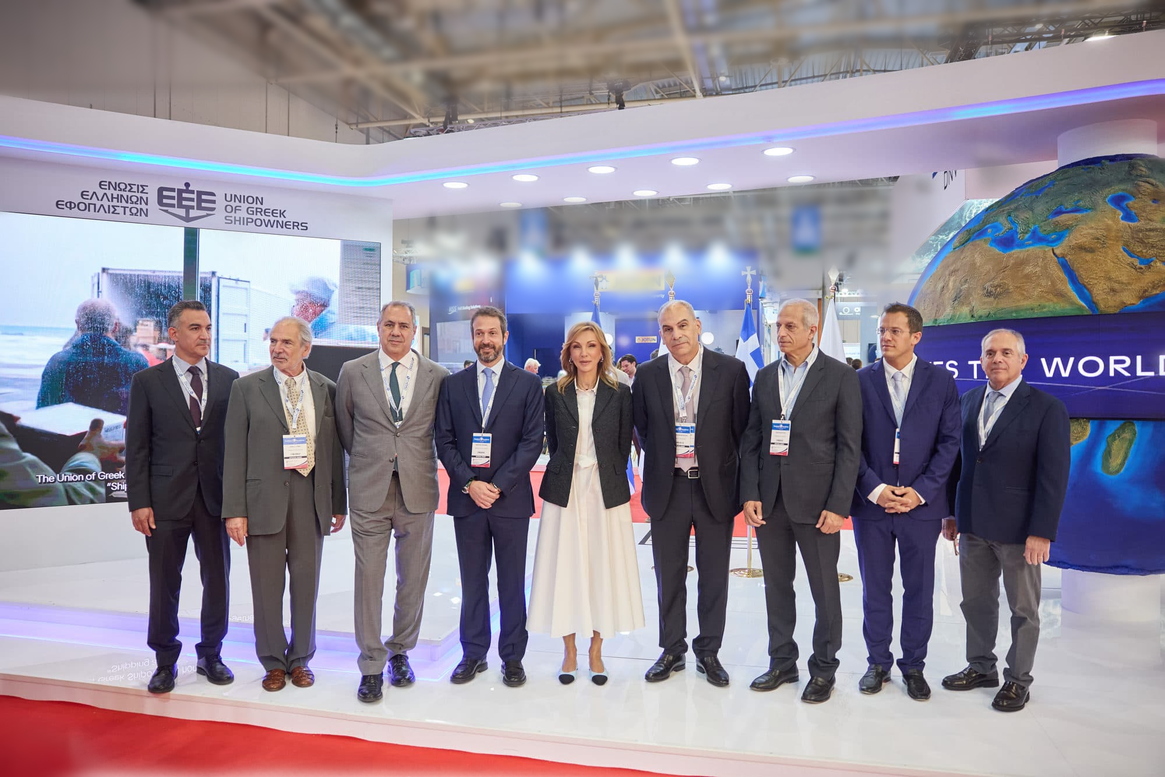
On the third day of Posidonia 2026, the world's most prestigious international shipping exhibition, the conversation inside the halls of the Athens Metropolitan Expo transcended geopolitics, cargo tonnage, insurance premiums and charter rates. The most senior figures in global maritime governance - from the Secretary-General of the International Maritime Organization (IMO) to the President of the Union of Greek Shipowners and shipping ministers representing some of the world's most important flag states - turned the spotlight on the two issues that will define the industry's next decade: the safety and dignity of the men and women at sea, and the race to decarbonise global shipping.
The day's discourse, shaped by an extraordinary concentration of political and regulatory authority, made clear that Posidonia is the forum where the maritime world takes stock of itself.
When asked to identify the single most pressing item on the IMO's agenda, Secretary-General Arsenio Dominguez said: "Seafarer wellbeing and seafarer safety is our top priority. The industry depends on the people, the men and women, who are on ships day in day out, responsible for keeping global trade running. In zones of conflict, it is the seafarers who are on the front line, dealing with uncertainty, psychological stress and concern for their own families. The most pressing agenda right now is to seek de-escalation and resolution of conflict. I will continue to engage with all States and stakeholders to speak up for seafarers."
The statement carried particular weight given the current geopolitical climate - with maritime trade routes under pressure from regional conflicts and chokepoint tensions that have placed merchant vessels, and the seafarers aboard them, in harm's way with increasing frequency.
He added: "I call on the industry to stand with IMO in defending the principle of freedom of navigation, including the rejection of tolls and discriminatory transit measures. I hope that Posidonia will see strong commitments to the energy transition, with increased focus on energy efficiency technologies, alternative fuels and looking to the future with orders for dual fuel ships. Above all, we need to keep investing in our workforce, championing diversity and inclusion while finding more ways to attract the next generation of seafarers."
No voice carries greater weight at Posidonia than that of the Greek shipowning community - the largest in the world - and this year, Union of Greek Shipowners President Melina Travlos used her address to offer the perspective of the most powerful shipping nation in the world.
She said: "Seafarers should never have to face conditions of increased risk, let alone risks to their very lives. We hope that peace and respect for international law will prevail, so that the seas remain open, safe, and free for the benefit of all peoples."
The green transition, Travlos argued, cannot be treated as a problem that the shipping industry can solve alone, or on a timeline determined by regulatory convenience rather than technological and infrastructural readiness: "Shipping's decarbonization is utterly dependent upon external factors. The availability of safe fuels, fit-for-purpose technologies and adequate infrastructure depend entirely on other sectors. The green transition requires technological feasibility, economic viability, global coordination, and a level playing field. Otherwise, higher costs will be imposed on the entire supply chain without delivering the corresponding environmental benefits."
Few flag states have articulated a more distinctive or more proactive philosophy in response to the current regulatory vacuum than Malta. Its position rests on three interlocking convictions: that global solutions must ultimately prevail over regional ones; that technology neutrality through a goal-based approach is non-negotiable; and that, in the interim, flag state administrations have a responsibility to fill the regulatory vacuum with authoritative, commercially useful guidance.
"We are actively moving past administrative sluggishness; if a vessel can thoroughly prove its safety through Alternative Design and Arrangements, our technical department will facilitate its deployment now, rather than allowing it to be delayed by bureaucratic backlogs," said Dr Ivan Tabone, Registrar General of Shipping and Seamen, Malta Ship Registry.
The Registry's approach to the IMO framework's delayed finalisation is equally direct. Malta is not waiting for diplomatic resolution before preparing its fleet for the operational reality of the metrics that will eventually govern global shipping emissions.
Dr Ivan Tabone continued: "The IMO Net-Zero Framework may be experiencing diplomatic and political delays, but the work on technical guidelines must not pause, and Malta is actively preparing its fleet for the operational reality of Greenhouse Gas Fuel Intensity metrics today. Malta continues to advocate firmly for a unified, global level playing field that rewards real-world carbon reduction, rather than forcing shipowners to navigate fragmented, check-the-box regional compliance frameworks.”
Cyprus Shipping Minister Marina Hadjimanolis arrived at Posidonia 2026 with a message that spoke as much to the process of good governance as to the substance of maritime policy. "Shipping is facing multiple pressures simultaneously, from geopolitical instability and trade disruptions to the challenges of decarbonisation, digitalisation and the evolving regulatory landscape. Open and constructive dialogue between policymakers and industry stakeholders is therefore more important than ever," she said.
Hadjimanolis also highlighted the human capital dimension of maritime transformation, noting that the digitalisation of shipping places a premium on continuous investment in workforce skills - a theme that echoed the IMO Secretary-General's own emphasis on the people at the heart of the industry. She offered what amounted to a governance philosophy for the gathering of maritime ministers.
From the other side of the world - but deeply embedded in the same global conversation - Singapore's Senior Minister of State for Law and Transport, Murali Pillai, brought the perspective of Asia's pre-eminent maritime hub to Posidonia 2026.
"Amidst a more complex and rapidly evolving operating environment, Singapore remains committed to being a trusted node in global trade. We are charting the course ahead and investing in our port's digital and decarbonisation capabilities to support a more resilient, efficient and sustainable maritime future," he said.
No maritime jurisdiction occupies a more literally strategic position than Gibraltar. Straddling the narrow passage between the Atlantic and the Mediterranean - a corridor through which some 60,000 vessels transit each year - Gibraltar has long derived its maritime identity from geography. But geography alone does not build a competitive maritime hub, and Minister Gemma Arias-Vasquez made clear that Gibraltar's ambitions extend well beyond the enduring advantage of its location.
She said: Gibraltar’s perspective is rooted in its role as a major Mediterranean port and bunkering hub. We support seafarers’ rights through practical welfare support for crews visiting Gibraltar, strong Maritime Labour Convention (MLC) standards for Gibraltar-flagged vessels, and a port community that recognises seafarers as essential to global trade. On decarbonisation, Gibraltar supports a realistic transition through cleaner bunkering, readiness for alternative fuels and close alignment with IMO objectives, ensuring the maritime sector reduces emissions while remaining safe, competitive and operationally resilient.
Day 3 of Posidonia 2026 closed with a sense, shared across delegations, that the maritime industry stands at an inflection point unlike any in recent memory. The regulatory architecture for decarbonisation is being built in real time, imperfectly and under diplomatic strain. Geopolitical turbulence is testing the norms of free navigation and the safety of the men and women who make global trade possible. And the jurisdictions, administrations, and hubs that will define the next era of shipping are, right now, making the investments and choices that will shape that future.
Those two themes - people and planet - are not incidental to Posidonia. They are its foundation. Now in its third consecutive edition to receive ISO certification as a sustainable event, Posidonia remains the first exhibition in Greece to achieve that distinction, a reflection of the organisers' commitment to minimising environmental impact while maximising benefit for the local economy. And the show's official charity partner, The Seafarers' Charity, exists for precisely the purpose that the IMO Secretary-General and the President of the Union of Greek Shipowners both placed at the centre of their remarks: to build a world where seafarers and their families are valued and free of need and disadvantage.
Posidonia 2026 is organised under the auspices of the Ministry of Maritime Affairs and Insular Policy, the Hellenic Chamber of Shipping and the Union of Greek Shipowners, with the support of the Municipality of Piraeus and the Greek Shipping Co-operation Committee.
-//-
For additional information, Press inquiries should be directed to:
Artemis Vamvakopoulou, Posidonia Press Officer, EXTROVERT | Business Communications,
Tel: +30 210 6724265, Email: posidoniapress@extrovert.gr
Maria Photou, Marketing & Events Manager, Posidonia Exhibitions SA,
Tel: +30 210 4283608, Email: mphotou@posidonia-events.com
Posidonia 2026 Press Office sponsored by: